

What are the key operational flows we need to set up for product distribution in Europe?
Welcome to the Expert Q&A series
Where AzurBio’s industry veterans distill decades of experience into the very information you need: critical knowledge to understand European markets and avoid common pitfalls that derail market entry strategies.
Key takeaway
Setting up European operations involves a mix of regulatory compliance and practical logistics. Plan early, choose reliable partners, and document every step. By launch, you should have a tested supply chain that can deliver your drug from the factory to a patient’s bedside anywhere in Europe, efficiently and in compliance with all laws. That way, when demand arises in each new country, you can capitalize on it without logistical hiccups.
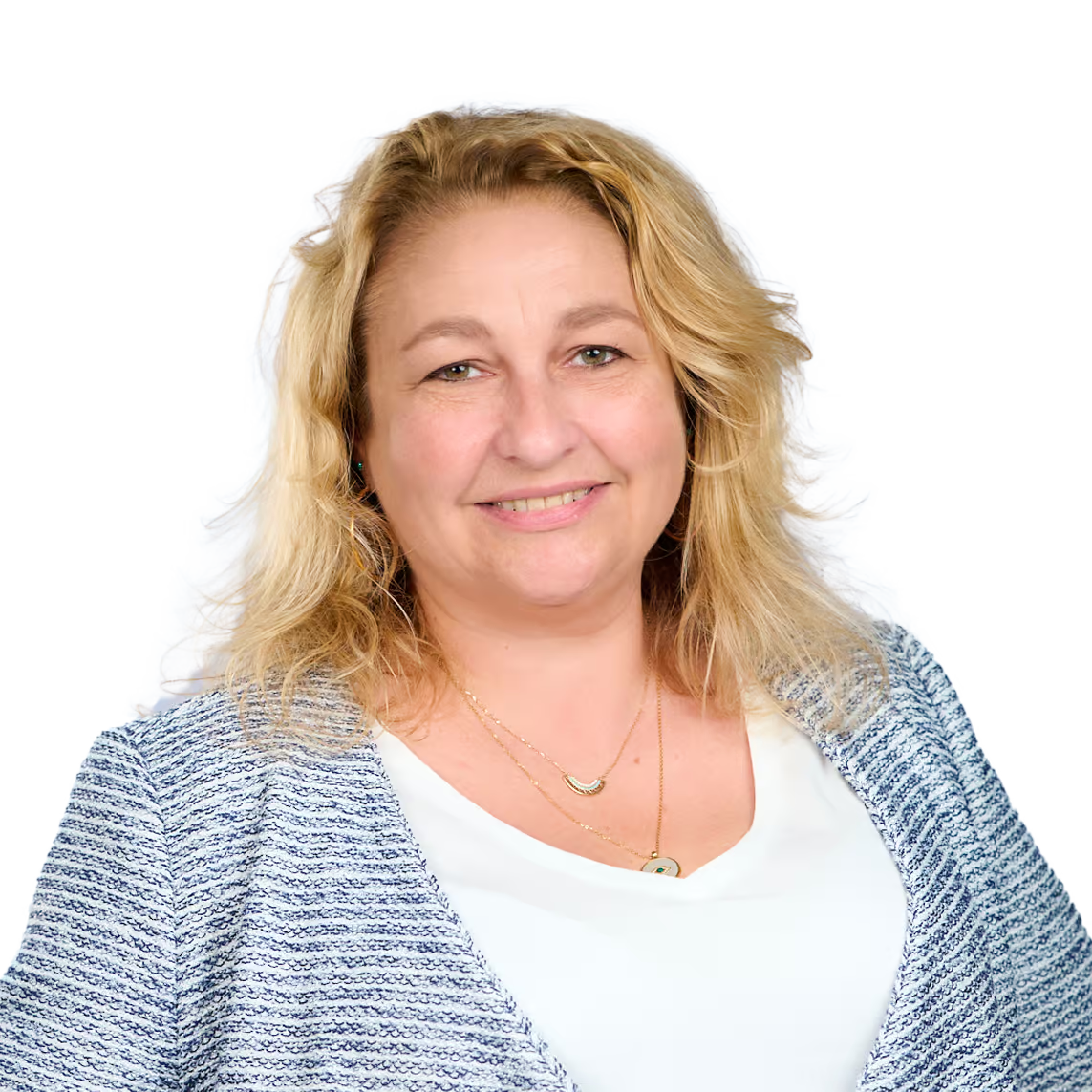
Nadia Boehringer
Chief Operating Officer, Europe
Experienced Regulatory Affairs executive with 25+ years leading global regulatory strategies, international product registrations, and successful market launches. Strong expertise in European regulations and aligning cross-functional teams to accelerate market access and compliance.
Launching in Europe requires a robust operational infrastructure for distributing and selling your product across multiple countries. You’ll need to establish end-to-end flows for the product itself (physical flow), the transfer of title (title flow) and money (financial flow), and compliance responsibilities (regulatory and quality flow). Here are the critical components:
Manufacturing and QP release (physical flow start)
If your drug is made outside the EU, you must import it into the EU through a duly licensed facility. That facility, often a contract manufacturing organization or third-party logistics hub, must hold an MIA (Manufacturing Import Authorization) and have a Qualified Person (QP). The QP’s job is to review the batch documentation and certify that each batch was made under GMP standards and meets all requirements before releasing it for distribution. No batch can be sold in the EU without QP certification. This step is analogous to the final quality checkpoint.
If your product is manufactured within the EU, the QP at the manufacturing site performs this release. Either way, you need to integrate QP release into your supply chain timeline. Plan for a certain lead time for QP review and any required testing (for example, some biologics or vaccines undergo official batch testing by a state lab in the EU prior to release).
Central warehousing and distribution (physical flow continuation)
Most companies set up a central European distribution hub, commonly in a logistics-friendly location like the Netherlands, Belgium, or Germany. From this central warehouse, products can be shipped to fulfill orders from all your European markets. The hub should operate under Good Distribution Practice (GDP) standards: controlled storage conditions (especially for cold chain products), proper security, and accurate inventory tracking (including serialization).
You may partner with a 3PL (third-party logistics provider) that specializes in pharma distribution. They can store your drug and deliver to wholesalers, hospitals, or pharmacies in each country as orders come in. Ensure your 3PL has experience with multi-country distribution and can handle customs and VAT for any cross-border shipments (post-Brexit UK shipments now require customs clearance, for example).
Local distribution and title transfer
Decide how you will fulfill orders in each country. In some cases, you might ship directly from the central warehouse to the end customer (hospital pharmacy or wholesaler). In other cases, you might establish a local stock point or use local distributors. For example, you might ship bulk to your affiliate in Italy, which then distributes locally. Title flow refers to who owns the product at each stage. Some models: your central EU entity (say in Ireland or the Netherlands) holds title and sells directly to hospitals or through wholesalers in each country (direct model), or your local affiliates take title and sell in their market (affiliate model).
The direct model simplifies global control and may be preferred if you don’t have full affiliates everywhere; the affiliate model can make local operations (like invoicing and contracting with hospitals) easier but requires transfer pricing and tax considerations between the central entity and affiliates. Many small companies opt for a centralized model where one entity is the seller across Europe, using local logistics providers for last-mile delivery.
Financial flows and invoicing
From a financial perspective, set up the capability to invoice customers in each country’s required format and currency. The euro is common for many markets, but you’ll have GBP for the UK, CHF for Switzerland, etc. Determine whether your central entity will invoice in local currency or in euros and have customers/self handle conversion. You’ll also need to handle VAT (Value Added Tax): each country has its own VAT rate for medicines (often a reduced rate).
If you sell directly into countries, your entity likely needs to register for VAT in those countries to charge the correct VAT and possibly to reclaim import VAT. Alternatively, if using affiliates, the affiliate handles local VAT. Implementing an ERP system that can manage multi-country orders, multiple currencies, and VAT is very helpful.
Order management and logistics
Establish how orders will be received and processed. Hospitals may order via local wholesalers or directly from you. In some markets, tenders or contracts determine who orders. If using wholesalers, you supply them and they supply hospitals/pharmacies. If direct, you might have an e-mail or online ordering system for hospital pharmacies to request product.
Ensure your supply chain team can manage different order patterns: some countries might stock a lot upfront, others do just-in-time ordering for each patient. For specialty drugs, you might even ship per patient (with patient-specific labels or tracking). Having a customer service capability for Europe is important: a team or partner who can interface with hospital pharmacists or distributor customers in local languages about orders, delivery status, returns, etc.
Compliance in distribution
All along, maintain GDP compliance. This means temperature monitors in shipments, route validation for cold chain, secure packaging (locks or seals on high-value medicine shipments), etc. Also, implement a system to perform serial number tracking: by law, when a pack is dispensed to a patient, the pharmacy will scan and “decommission” the serial number.
If you distribute via wholesalers, they may not scan (they just forward). But you, as the MAH, should monitor the European Medicines Verification System for any alerts (e.g. a counterfeit or an issue with your serials). You must also upload all manufactured serials to the system. These technical details need an IT solution, often handled by your packaging/serialization vendor and a consultant to connect to the EU hub.
Parallel trade management
Because of price differences, parallel trade is common in Europe: a wholesaler in one country might buy your product at a lower price and export it to a higher-price country. This can lead to revenue leakage and potential local shortages. While you cannot ban parallel exports (it’s legal within the EEA), you can manage supply carefully.
For instance, allocate stock to each country based on realistic demand (plus a buffer) so that one country doesn’t order far above its need (possibly for exporting). If you see unusual ordering patterns, investigate. Some companies include unique coding or use the serial data to trace which batches end up where, to identify parallel exporters. Legally, you must ensure supply to each market’s patients, so be cautious about unduly restricting supply: authorities can penalize companies for withholding stock. A balanced approach is needed.
Returns and recalls
Set up a process for handling product returns (e.g. damaged goods, recalls, expired inventory). Determine where returns should be shipped (usually back to the central warehouse or a reverse logistics provider). Have a system to issue credit notes and properly destroy returned product (with documentation).
Also, prepare a recall procedure in case you need to recall a batch: you’ll need to notify all distribution chain participants and authorities and account for all units. Conduct mock recalls to test your system. In Europe, you must notify the EMA and all national authorities in a recall situation (which your QP or PV lead might coordinate).
Payment flows
Finally, ensure you can collect payments from customers in various countries. If selling direct, you may need to chase payments from public hospitals or health systems, which can be slow payers (in some countries, average payment times exceed 90-120 days).
Consider credit risk insurance or working with factoring if cash flow is an issue. If you partner with wholesalers, they typically pay on invoice terms (30-60 days) but expect a discount. Build these financial terms into your pricing model (wholesaler margin, etc.). Also plan for currency risk: if you invoice in certain local currencies, have a strategy for how to hedge or absorb exchange fluctuations relative to your home currency.
Local operating company vs. distributor
If you have established affiliates in major markets, those affiliates might handle some of these flows locally, e.g. the UK affiliate will import and distribute in the UK, the German affiliate might manage German hospital contracts, etc. If you don’t have an affiliate, you might appoint a local distributor.
For example, some biotechs use an exclusive distributor in smaller markets to handle importation, warehousing, and even promotional activities. In such cases, that distributor becomes your link in that country’s supply chain (they would be the one selling to hospitals, and you sell to them). This can simplify operations in those markets, though you lose some margin to distributor fees. Make these decisions based on the business case in each country (cost to maintain your own operations vs. distributor fees vs. expected revenue).
Many emerging companies choose to outsource much of the operational flow to experts. You can hire a single provider to act as your European logistics platform: some companies offer integrated commercialization services, effectively functioning as your MAH and distributor. This can be a solution if you want to launch in Europe without building full infrastructure. But even then, you should understand these flows to oversee the partner.
Key roles to manage operational flows: Your Supply Chain Director will coordinate manufacturing forecasts with country demand (accounting for the staggered launches). A QP (in-house or contracted) will ensure timely batch release. A Logistics/Distribution Manager will manage 3PL and shipment logistics. Finance personnel will handle multi-country invoicing and revenue recognition. And an IT lead may be needed to integrate serialization and ERP systems.